


5 Reasons Why Botox is Ideal for Forehead Lines and Wrinkles

Introduction
If you have started typing botox near me into your phone after catching your reflection under harsh lighting, you are far from alone. Horizontal forehead lines are one of the first signs of ageing most people notice, and they tend to appear earlier than expected.
Those lines are stubborn for a simple reason. They are not caused by dry skin or a lack of moisturiser.
They form because a muscle underneath keeps folding the same piece of skin for years. That is exactly the problem botulinum toxin was designed to solve, and it explains why searches for botox near me spike among people in their thirties.
Why Forehead Lines Form in the First Place
Your forehead is powered by one broad muscle, the frontalis. It is the only muscle that lifts your eyebrows, so it works constantly, folding the thin skin above it every time. Several factors decide how quickly a temporary crease becomes permanent:
• Repetition. Expressive people crease the same lines thousands of times a week.
• Collagen loss. From your mid twenties, skin recovers from folding more slowly.
• Thin skin. The forehead has less structural support than the cheeks.
• Sun exposure. UV damage breaks down the collagen holding the skin flat.
• Genetics. Brow position and muscle strength are largely inherited.
Creams work on the surface. They cannot reach the muscle doing the folding, which is why many people eventually look for a clinical option.For those looking to soften forehead lines while maintaining natural facial expressions, AVA Clinic offers personalised Botox treatments based on individual facial movement and aesthetic goals.
5 Reasons Why Botox is Ideal for Forehead Lines
1. It Treats the Cause, Not Just the Surface
Botulinum toxin type A interrupts the signal telling the frontalis muscle to contract. With the muscle resting, the skin above it lies flat and the horizontal lines soften from underneath.
According to the American Academy of Family Physicians, botulinum toxin injection is the most frequently performed cosmetic procedure in the United States, and upper face treatment offers predictable results with few side effects.
2. It Works as a Preventative Treatment
You do not need deep, permanent grooves to benefit. Treating lines while they still appear only during expression stops them etching into the dermis long term.
Patients who start earlier often need lower unit counts per session, longer gaps between appointments, and fewer corrective treatments later on.
3. There Is Genuinely No Downtime
A forehead treatment takes around 15 minutes once the assessment is complete. There are no incisions, no stitches and no recovery period, so most people head straight back to work. The only restrictions are staying upright for a few hours, avoiding pressure on the area, and skipping the gym or sauna for the rest of the day.
4. Results Look Natural When the Dose Is Right
The frozen look people worry about is not caused by the product. It is caused by too much product, or product placed in the wrong spot.
A properly assessed treatment softens the lines that fold hardest while leaving enough movement for expression. You should still be able to raise your brows. You simply will not carry deep creases when you do.
5. Every Treatment Plan Is Customised
There is no universal forehead dose. Your practitioner adjusts the plan based on muscle strength, forehead height, brow position and how much movement you want to keep. Men often need more units because the frontalis is denser, and long term patients frequently find maintenance sessions require fewer units over time.
You can read how these injections are assessed and administered on the clinic’s wrinkle treatment page.
What to Check Before You Book
Searching botox near me will return plenty of options, and they are not all equivalent. Before committing, work through this list:
1. Confirm it is a licensed medical clinic. In Malaysia, aesthetic procedures should be performed at a facility registered with the Ministry of Health, with LCP certification.
2. Ask who is injecting. The person holding the needle should be a doctor, not a therapist.
3. Ask which product is used. Botox, Dysport and Xeomin are all botulinum toxin type A, but they are not dosed identically.
4. Expect a proper assessment. A practitioner should watch your face move before deciding anything.
5. Check a review is included. A follow up at two weeks allows any asymmetry to be adjusted.
Convenience matters, but proximity should never decide it. The result depends far more on the injector than the location, so the closest option on a botox near me search is not automatically the right one. Browse the aesthetic treatments offered at AVA Clinic to see the full range before your consultation.
What Happens During Your Appointment
For anyone new to injectables, the process is simpler than expected:
• Assessment. Your doctor observes your forehead at rest and in motion, then maps the injection points.
• Preparation. The area is cleansed. Numbing cream or ice is available, though many patients skip it.
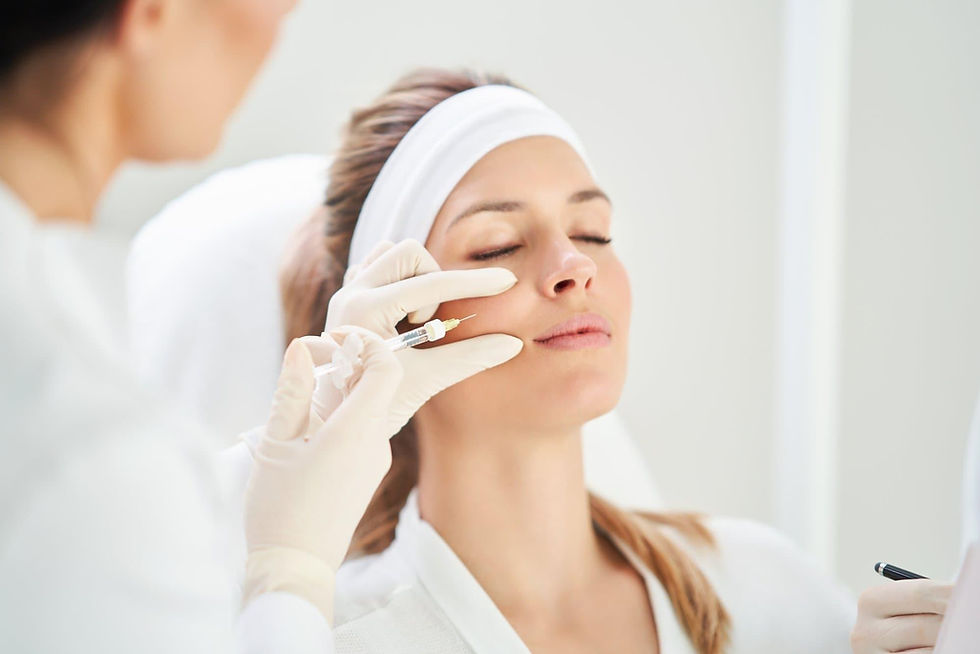
• Injection. A few micro injections are placed with a very fine needle, comparable to a mosquito bite.
• Onset. Movement begins to change around day three to five, with the final result at day 14.
• Maintenance. Results typically last three to four months.
Combining Botox With Other Treatments
Relaxing the muscle handles movement lines, but it does nothing for skin texture, hydration or laxity. Many treatment plans therefore pair the two approaches:
• Frown line treatment. The muscles between the brows pull down while the frontalis pulls up, so treating both keeps the upper face balanced.
• Hydration support. Adding skin booster injections improves the crepey texture and dullness that muscle relaxation cannot address.
• Skin tightening. Energy based devices firm lax skin for more advanced ageing.
Frequently Asked Questions
1. How many units will I need for my forehead?
Most forehead treatments use between 10 and 20 units, depending on how strong your frontalis muscle is and how deep the lines already are. Your doctor confirms the exact dose during assessment rather than quoting a fixed number in advance
2. Will my eyebrows drop after treatment?
Brow heaviness is uncommon when the lower part of the forehead muscle is left strong enough to support the brows. It is a placement issue rather than a product issue, which is why the choice of injector matters most.
3. How long does it take to see results?
You will usually notice softer movement within three to five days. The complete result takes around 14 days to settle, so avoid judging your outcome before the two week mark.
4. Is the treatment painful?
Discomfort is minimal. The needles are extremely fine and the injections take only a few minutes. Numbing cream or ice can be applied beforehand if you are nervous.
5. What happens if I stop having treatments?
Your muscles gradually regain normal movement over the following months and your lines return to roughly where they were. They do not come back worse, which is a common misconception.
Conclusion
Forehead lines respond extremely well to treatment, but the result depends almost entirely on the assessment behind it. Instead of choosing the first clinic that appears when you search botox, look for a licensed practice with doctors who study how your face actually moves before recommending anything.
If you would like an honest opinion on whether treatment is right for you, and how much you would actually need, book a consultation with AVA Clinic in Kuala Lumpur.


Comments